





How Does a Self-priming Pump Work and Why Is It Suitable for Difficult Pumping Applications?
Release time: 2026-09-03
Table of Contents
In many water transfer and industrial pumping applications, starting the pump quickly and maintaining stable performance can be challenging, especially when the pump needs to handle air in the suction line, changing liquid levels, or complex installation conditions. A self-priming pump is designed to solve these problems by automatically removing air from the suction pipeline and creating the necessary suction capability without frequent manual priming.
Compared with traditional pumps that require the suction pipe to be completely filled with liquid before operation, a self-priming pump provides greater convenience and operational reliability. This makes it widely used in wastewater transfer, drainage systems, industrial water circulation, construction sites, and other applications where fast startup and flexible installation are important.
How Does a Self-priming Pump Work?
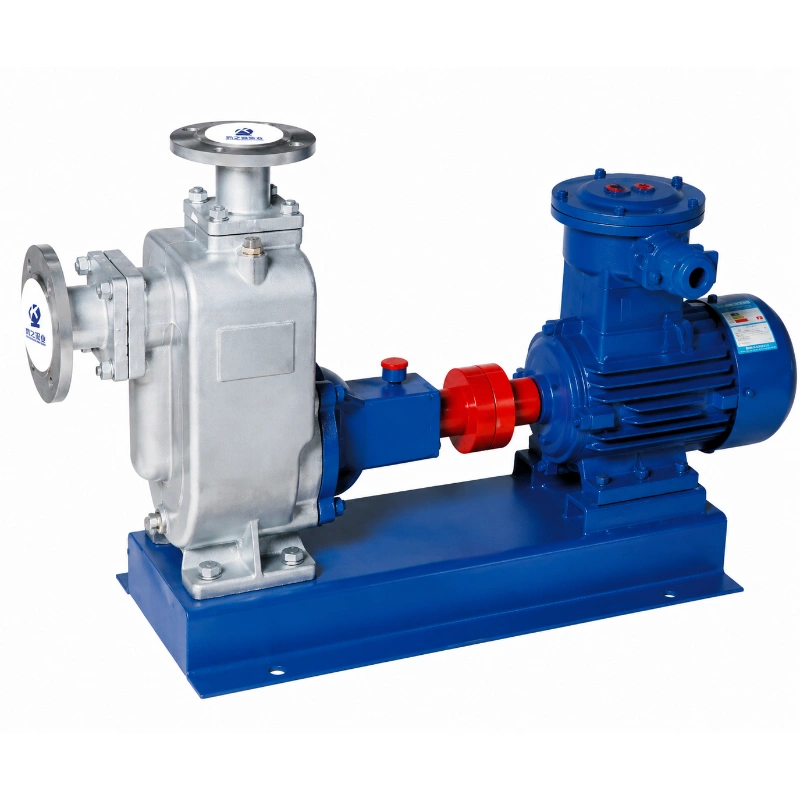
A self-priming pump works by using a specially designed pump chamber that can separate air and liquid during startup. When the pump begins operating, the impeller creates a pressure difference that allows the pump to draw in the mixture of air and liquid from the suction pipe. The air is discharged while the liquid remains inside the pump chamber, gradually establishing a continuous pumping cycle.
Once the suction process is completed, the pump can operate like a standard centrifugal pump, continuously transferring liquid with stable flow. This automatic priming capability reduces downtime and eliminates the need for operators to manually fill the suction line before each operation.
For applications where pumps may stop and restart frequently, this feature can significantly improve convenience and reduce maintenance requirements. The ability to restart quickly is one of the main reasons why self-priming designs are preferred in demanding pumping environments.
Why Choose a Self-priming Pump for Difficult Applications?
Many pumping environments involve conditions that are not ideal for conventional pumps. For example, wastewater systems may contain air pockets, drainage applications may experience unstable water levels, and temporary pumping projects may require frequent relocation of equipment.
A self-priming pump provides several advantages in these situations. Its air-handling capability helps maintain reliable operation, while its flexible installation allows the pump to be positioned above the liquid source in many applications. This is especially useful for locations where installing a fully submerged pump or maintaining a flooded suction condition is difficult.
In addition, self-priming pumps are often selected for applications requiring easy maintenance and quick deployment. Industries such as construction, agriculture, municipal water management, and wastewater treatment can benefit from their practical design.
Common Applications of Self-priming Pumps
The application range of self-priming pumps depends on the pump structure, material selection, and operating requirements. Different models can be designed for clean water, wastewater, drainage, or industrial fluids.
| Application Area | Pumping Requirements | Benefits of Self-priming Pump |
| Wastewater Transfer | Handling liquids containing air or impurities | Stable suction performance and easier operation |
| Construction Drainage | Temporary water removal and frequent relocation | Quick startup and flexible installation |
| Industrial Water Circulation | Continuous liquid transfer | Reliable flow and reduced downtime |
| Agricultural Irrigation | Water transfer from different sources | Convenient operation without frequent priming |
| Municipal Drainage Systems | Emergency and routine drainage | Improved response speed and operational efficiency |
Self-priming Pump vs Traditional Pump: What Is the Difference?
The biggest difference between a self-priming pump and a conventional pump is the ability to handle air during startup. Traditional pumps usually require the suction pipe and pump chamber to be filled with liquid before operation. If air enters the system, the pump may lose suction performance and require additional maintenance.
A self-priming pump reduces this limitation through its internal design, allowing it to automatically remove air and restore pumping performance. This makes it a practical choice for applications where operating conditions can change frequently.
However, selecting the right pump still requires consideration of factors such as flow rate, head pressure, liquid characteristics, temperature, and installation environment. A suitable pump should match the actual requirements of the system instead of being selected only based on pump type.
For users looking for a reliable solution for challenging pumping conditions, the Self-priming Pump Series provides different options for water transfer, drainage, and industrial applications. Choosing the right model can help improve system efficiency while reducing operation and maintenance difficulties.
How to Select the Right Self-priming Pump?
Before purchasing a self-priming pump, users should evaluate several important factors. The required flow capacity determines how much liquid the pump can transfer within a specific period, while the total head affects whether the pump can deliver liquid to the required height or distance.
The characteristics of the pumped liquid are also important. Clean water applications may require different configurations compared with wastewater containing solids or particles. Material compatibility, operating frequency, and environmental conditions should all be considered during selection.
For example, the ZX Self-priming Sewage Pump is designed for applications that require reliable wastewater handling and strong suction performance. Solutions like this are commonly used where stable operation and easy maintenance are important requirements.
A properly selected pump not only improves pumping efficiency but also helps extend service life and reduce unexpected downtime. For industries that rely on continuous water transfer, investing in the correct self-priming solution can provide long-term operational benefits.
The development of modern pumping systems continues to focus on efficiency, reliability, and easier maintenance. With its automatic priming capability and adaptability to complex working conditions, a self-priming pump remains an effective choice for many industrial and water management applications.
FAQ
What is a self-priming pump?
A self-priming pump is a pump designed to automatically remove air from the suction pipeline and create suction without manual priming. This feature allows the pump to start more easily and maintain reliable performance in applications with changing liquid levels or air in the pipeline.
How does a self-priming pump work?
A self-priming pump uses its internal chamber and impeller structure to separate air from liquid during startup. The air is discharged while liquid remains inside the pump, allowing the system to gradually build suction and achieve continuous pumping.
What are the common applications of self-priming pumps?
Self-priming pumps are widely used for wastewater transfer, construction drainage, agricultural irrigation, industrial water circulation, and municipal drainage. They are especially suitable for applications where quick startup, flexible installation, and stable suction performance are required.
How do I choose the right self-priming pump?
Selecting the right self-priming pump requires considering factors such as flow rate, head pressure, liquid characteristics, installation environment, and operating conditions. Choosing a suitable model based on the actual application can improve efficiency and extend pump service life.