





Self-Priming vs Submersible Sewage Pump: Which Type Fits Different Applications?
Release time: 2026-09-21
Table of Contents
Choosing the right sewage pump is not simply a matter of checking flow rate and motor power. In real wastewater applications, installation conditions, solids content, maintenance access, and the way the pump starts can all affect long-term performance. Two common options are self-priming and submersible sewage pumps, and each is designed around a different operating approach. Understanding these differences can make pump selection much easier, especially when dealing with municipal wastewater, industrial drainage, construction sites, or liquids containing solids and fibrous materials.
A self-priming pump is generally installed outside the wastewater pit or tank, while a submersible pump operates directly inside the liquid. That basic difference influences everything from installation to maintenance and daily operation. Instead of asking which type is universally better, it is more useful to look at the actual working conditions and determine which design fits the application.
Self-Priming Sewage Pump for Above-Ground Installation
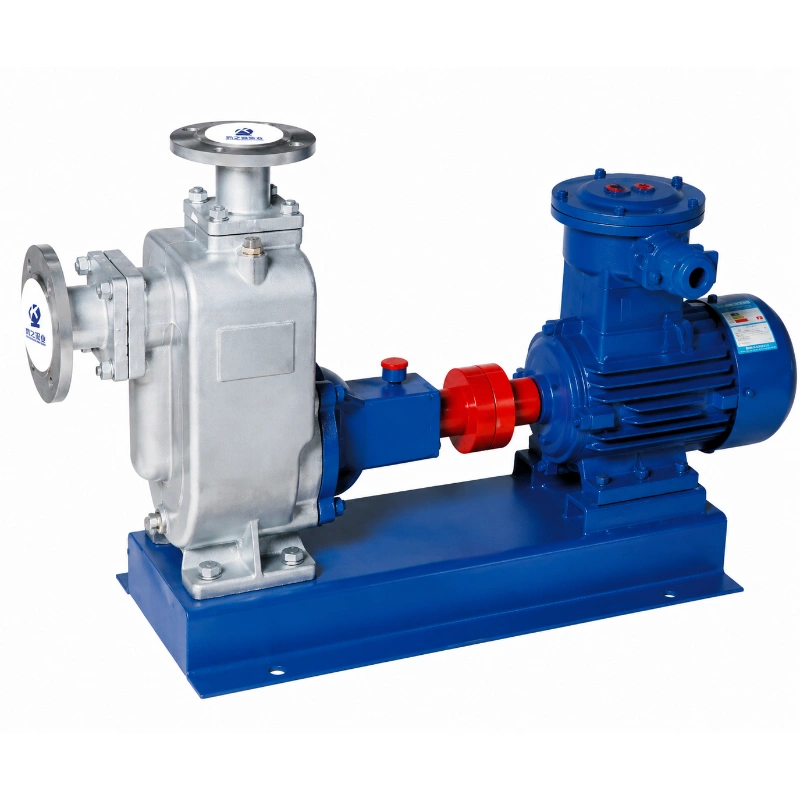
Self-priming sewage pumps are often considered when the pump needs to remain accessible outside the wastewater collection area. Unlike a conventional pump that may require manual priming before operation, a self-priming design is built to remove air from the suction line and establish pumping conditions automatically within its operating range. This can be particularly useful where the pump is installed above the liquid level and regular access to the equipment is preferred.
For industrial drainage, municipal projects, and some wastewater transfer applications, an above-ground configuration can make inspection and routine servicing more convenient. However, the suction arrangement still needs to be designed correctly, including pipe length, suction lift, and the characteristics of the wastewater. The ZX and ZW self-priming sewage pump series are examples of equipment designed for applications where above-ground installation and self-priming capability are important considerations.
Submersible Sewage Pump for Direct Wastewater Handling
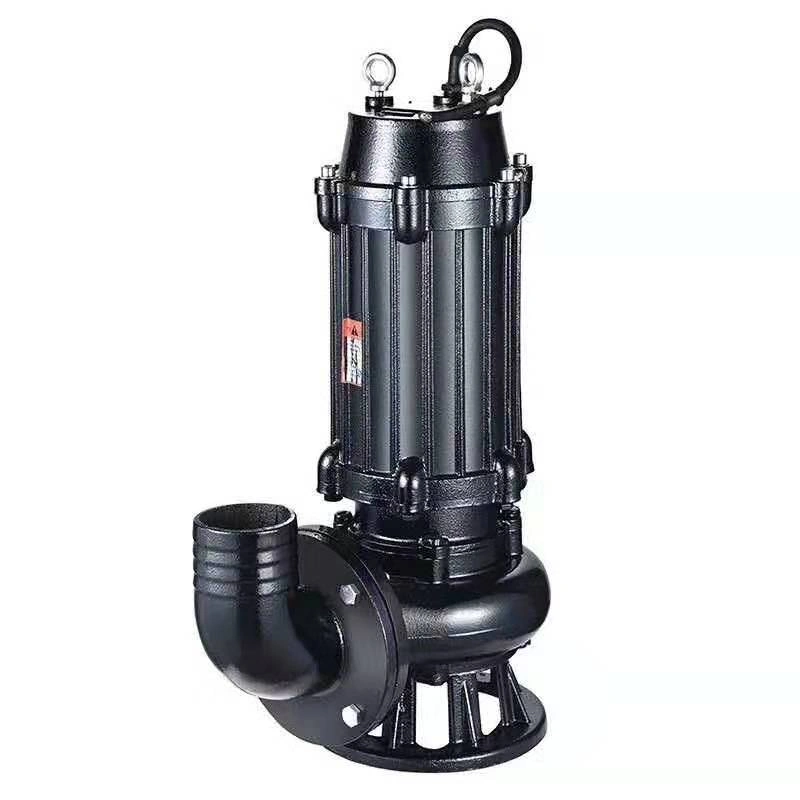
A submersible pump takes a different approach: the complete pump and motor assembly is placed directly into the wastewater. Because the pump operates while fully submerged, there is no traditional suction-lift arrangement to manage in the same way as an above-ground pump. This makes the configuration particularly practical for pits, tanks, collection wells, and other locations where the pump can operate directly at the liquid source.
Modern Submersible Sewage Pump designs can also provide useful advantages when wastewater contains solids or fibrous debris. The WQ non-clogging submersible sewage pump, for example, uses single- or dual-channel impeller designs to handle liquids containing solid particles and long-fiber materials. Its compact integrated structure also reduces installation space requirements, while automatic coupling devices can simplify installation and removal on larger models.
Self-Priming vs Submersible Sewage Pump: Key Differences
The most important differences become clearer when the two pump types are compared according to actual operating conditions. Installation is one of the first factors to consider. A self-priming pump is normally installed outside the liquid, which provides easier physical access to the pump body and motor. A submersible pump works inside the wastewater and can therefore reduce the need for a large above-ground pump room.
Priming is another major distinction. Self-priming equipment is designed to establish pumping conditions even when air is present in the suction line, but the installation still needs to stay within the pump’s specified suction conditions. A submersible design avoids this traditional priming issue because the pump is positioned directly in the liquid.
Solids handling also deserves attention. Not every sewage pump handles solids in the same way, so the impeller design and passage size should be checked against the actual wastewater. The WQ series is designed for non-clogging operation and can pass fibrous materials and solid particles, making this feature especially relevant for demanding wastewater environments.
| Factor | Self-Priming Sewage Pump | Submersible Sewage Pump |
| Installation | Usually above ground | Directly submerged |
| Priming | Self-priming capability required | No traditional priming |
| Space | Requires external installation space | Compact installation |
| Solids handling | Depends on pump design | Designed options for solids and fibers |
| Maintenance access | Easy physical access | May require lifting/removal |
| Typical use | Above-ground wastewater transfer | Pits, tanks, sewage wells and drainage |
How to Choose the Right Pump for Wastewater Applications
The best choice starts with the wastewater itself. If the liquid contains long fibers, suspended solids, sludge, or debris, check the pump’s passage size and impeller design rather than relying only on the word “sewage” in the product name. For example, the WQ non-clogging design is intended for wastewater containing particles and fibrous materials, with a single- or dual-vane impeller configuration that supports continuous material passage.
Installation conditions are equally important. If there is limited space around the collection tank or the pump needs to operate directly inside a sump, a submersible configuration can simplify the overall layout. If operators need convenient physical access to the pump and the site is better suited to an above-ground arrangement, a self-priming model may be more appropriate.
Flow and head should then be matched to the actual system requirements. The WQ series covers a flow range of approximately 6–800 m³/h and a head range of 14–80 m, while individual models vary according to discharge size, motor power, and operating conditions. These figures should always be checked against the required duty point rather than selecting a pump based only on nominal capacity.
Maintenance and Long-Term Operating Considerations
Maintenance requirements can also influence the decision between the two designs. An above-ground self-priming pump is generally easier to reach for inspection, cleaning, and component replacement. This can be useful in facilities where operators perform frequent routine checks. However, the suction line and priming performance also need to be monitored as part of the overall system.
A submersible sewage pump requires a different maintenance approach. Since the pump operates underwater, removal may be necessary for detailed inspection or servicing. Automatic coupling systems can make this process more convenient on larger installations by allowing the pump to be installed or removed without requiring operators to enter the wet well.
The WQ series also incorporates protection features such as water leakage detection and thermal sensing in the motor windings. When combined with an automatic control cabinet, these features can help monitor leakage, electrical faults, and motor overload conditions. For facilities that require continuous wastewater pumping, these protection functions can be an important part of the overall equipment configuration.
Which Pump Fits Your Application?
There is no single pump configuration that works best for every wastewater project. The decision should come from the relationship between installation layout, wastewater characteristics, flow and head requirements, maintenance practices, and operating conditions. A self-priming sewage pump can be a practical choice when above-ground installation and equipment accessibility are priorities. A submersible design can make more sense when direct operation in a collection pit or tank helps simplify the system.
For wastewater containing solids and long fibers, a non-clogging sewage pump with an appropriate impeller and passage design can be particularly useful. For example, the WQ series supports applications including municipal sewage treatment, construction drainage, and industrial wastewater from industries such as mining, papermaking, cement manufacturing, steelmaking, and power generation.
Ultimately, the right pump should be selected around the actual duty point and site conditions rather than simply choosing between “self-priming” and “submersible.” Looking at the complete operating environment first will usually lead to a more reliable and practical pumping solution.
FAQ
Can a submersible sewage pump handle solids?
Yes. Suitable models are designed with impellers and flow passages that allow wastewater containing solid particles and fibrous materials to pass through.
Does a self-priming sewage pump need to be installed underwater?
No. Self-priming sewage pumps are generally installed above ground and use a suction line to draw wastewater from the source.
What is the flow range of the WQ series?
The supplied WQ series performance range is approximately 6–800 m³/h, with heads from 14–80 m.
Which pump is easier to maintain?
An above-ground self-priming pump is generally easier to access directly, while larger submersible installations can use automatic coupling devices to simplify pump removal and maintenance.