





How to Choose a TD Pipeline Centrifugal Pump for HVAC and Industrial Water Circulation
Release time: 2026-10-18
Table of Contents
Choosing the right pump for a water circulation system involves more than comparing motor power or looking for the lowest purchase price. Flow rate, pump head, installation space, operating conditions, and maintenance requirements all affect how well a pump performs over time. For HVAC systems, building water supply, and industrial cooling applications, a suitable pipeline pump can help maintain stable circulation while keeping energy consumption and maintenance demands under control.
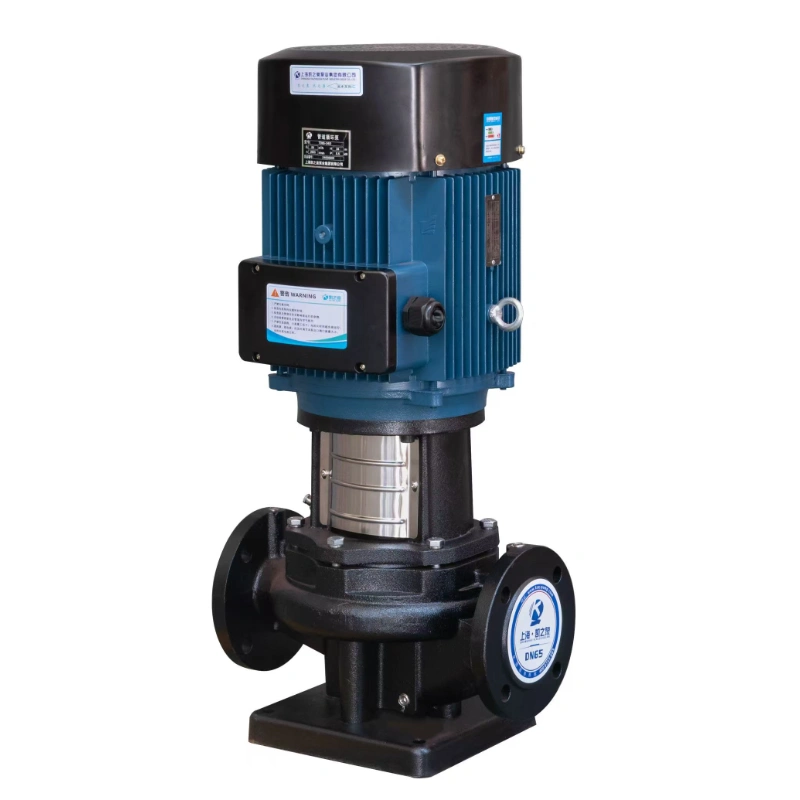
A TD Pipeline Centrifugal Pump is designed for vertical inline installation, with inlet and outlet connections aligned to fit directly into a pipeline. This arrangement makes it a practical option for projects where floor space is limited and a straightforward piping layout is preferred. However, the right model still depends on the actual system requirements. Before making a purchase, it is worth checking the required flow rate and head, the properties of the liquid, the available power supply, and the space available for installation. Understanding these factors helps buyers narrow down suitable models and avoid choosing a pump that is either undersized or unnecessarily powerful.
Understand the Application Before Selecting a Pipeline Water Circulation Pump
The first step is to identify what the pump needs to do. In HVAC systems, pumps commonly circulate chilled or hot water through heating and cooling equipment. In industrial facilities, they may support cooling loops or other clean-water circulation processes. Building water systems can have different pressure and flow requirements depending on the number of floors, pipe layout, and demand at the outlets.
These applications may all involve water circulation, but their operating conditions are not necessarily the same. A pump selected for a compact HVAC loop may not be the best choice for an industrial system with a higher flow demand or greater resistance through the piping network. Buyers should establish the required operating flow rate, total head, liquid temperature, and expected operating schedule before comparing models.
It is also important to confirm whether the medium contains suspended solids or other impurities. According to the product information, the TD series is intended for clean water without solid particles. If the application involves wastewater, abrasive particles, or chemically aggressive liquids, the pump’s suitability should be checked rather than assumed. Defining the application clearly makes the rest of the selection process more straightforward.
Match Flow Rate and Pump Head to System Requirements
Flow rate and head are two of the most important parameters when selecting a centrifugal pump. Flow rate describes the volume of liquid the pump delivers over a given period, while head represents the energy imparted to the liquid, expressed as a height of water column. Both values must match the requirements of the system for the pump to operate effectively.
A pump with insufficient head may fail to deliver the required flow through the piping network. On the other hand, choosing a model with far more capacity than necessary can lead to inefficient operation if the system is not designed to accommodate it. The goal is to identify a model that meets the expected operating point, not simply to choose the largest available option.
The TD series performance table provides model-specific flow rates, heads, rotational speeds, and motor power ratings. Buyers can use these figures to shortlist suitable options, then check the pump performance curve to confirm how the selected model performs under actual operating conditions.
| Selection parameter | What to check |
| Flow rate | Required water volume per hour |
| Pump head | System resistance and required delivery pressure |
| Motor power | Power demand at the selected operating point |
| Power supply | Compatibility with available voltage and phase |
| Performance curve | Whether the model meets the required duty point |
Final selection should be based on the complete system requirements, not on a single figure in the specification table.
Why a Vertical Inline Centrifugal Pump Can Save Installation Space
Installation layout is another practical consideration, particularly in mechanical rooms, plant rooms, and equipment areas where floor space is limited. A vertical inline centrifugal pump has its inlet and outlet arranged along the pipeline, allowing it to be installed directly into the system. This configuration can simplify the piping layout and reduce the need for a separate pump footprint compared with some other arrangements.
The TD pump’s coaxial inlet and outlet design supports this inline installation approach. Its vertical structure can be useful where equipment needs to fit into a compact space, although the actual footprint and required service clearance should still be checked against the installation drawing.
Before ordering, review the connection sizes, flange dimensions, mounting requirements, and overall pump dimensions. The product page includes structural drawings intended to help with installation planning. Make sure the existing pipework matches the selected model and that there is enough room to access components during servicing. A compact pump is only a good fit if it can also be installed safely and maintained without unnecessary disruption to the surrounding equipment.
Check Water Temperature, Pressure, and Material Compatibility
Operating conditions can affect pump reliability just as much as flow and head. The TD product information specifies a liquid temperature range of -15°C to 110°C for clean-water circulation. It also lists an ambient temperature limit of 43°C, relative humidity up to 95%, suction pressure up to 1.0 MPa, and working pressure up to 1.6 MPa.
These values should be checked against the conditions at the installation site. For example, a hot-water circulation system needs a pump suitable for its operating temperature, while a closed-loop cooling system must stay within the relevant pressure limits. Buyers should also distinguish between suction pressure, system working pressure, and the pressure conditions expected during operation rather than treating them as interchangeable specifications.
Material selection matters when the conveyed liquid or the operating environment places particular demands on the pump. The product description identifies a cast-iron pump body and stainless-steel internal parts, with different pump casing and mechanical seal materials available as options. Confirm the exact material configuration with the supplier before ordering, especially when the application requires specific corrosion resistance or compatibility with additives in the water.
Consider Energy Efficiency and Long-Term Maintenance
The initial purchase price is only one part of the cost of owning a pump. In systems that run for long hours, electricity consumption and maintenance access can have a significant effect on the overall operating budget. Selecting a pump that matches the system duty point helps avoid unnecessary oversizing and supports more efficient operation.
The TD series product description highlights an optimized hydraulic design intended to reduce flow losses and improve efficiency. Actual energy consumption will still depend on the selected model, operating point, system design, and operating schedule. For a meaningful comparison, buyers should review the available performance data and motor ratings rather than relying on general efficiency claims alone.
Maintenance access is another useful factor. The TD pump features a top pull-out structure that allows servicing without dismantling the pipeline. According to the product information, TD125 and TD150 models use an extended-shaft, easy-disassembly design, while TD200 and larger models feature quick-replace mechanical seals that can be changed without removing the motor. These design details may help reduce maintenance work, but the specific arrangement should be confirmed for the model being considered.
Choose the Right TD Pump Model for Your Project
Once the application, flow rate, head, installation conditions, and maintenance requirements are clear, buyers can compare the available TD models more efficiently. Start with the performance table to identify possible models, then use the performance curve and dimensional drawings to check whether each candidate suits the intended system. Motor power alone is not enough to establish whether a pump is appropriate.
It is also helpful to prepare the basic project information before contacting a supplier. Include the required flow rate and head, the type and temperature of the liquid, the operating pressure, the available power supply, and the pipeline connection requirements. If the pump will operate continuously, mention the expected operating schedule so the selection can take long-term use into account.
For HVAC circulation, building water boosting, and industrial cooling systems, the TD series offers a vertical inline configuration, maintenance-oriented structural features, and a range of models with different flow and head ratings. If you are sourcing a pipeline water circulation pump, share your operating requirements with the supplier to confirm the appropriate model, material configuration, and installation dimensions before placing an order.
FAQ
What applications are suitable for a TD Pipeline Centrifugal Pump?
The TD series is designed for clean-water circulation applications, including HVAC systems, domestic water boosting, and industrial cooling systems. Confirm the required flow, head, temperature, and pressure before selecting a model.
What liquid temperature range does the TD pump support?
The product information specifies a liquid temperature range of -15°C to 110°C. The pump should be selected according to the actual operating temperature and the confirmed configuration.
How do I select the correct TD pump model?
Start with the required flow rate and head, then check the performance table and pump curve. Also verify motor power, voltage and phase, liquid conditions, pipeline connections, and installation dimensions.
Can the mechanical seal be replaced without removing the motor?
The product page states that TD200 and larger models use integrated quick-replace mechanical seals that can be changed without removing the motor. The maintenance arrangement differs by model, so confirm the details for your selected size.
Is a vertical inline pump suitable for a space-limited installation?
Its vertical design and coaxial inlet and outlet can simplify pipeline integration in compact equipment areas. However, buyers should check the dimensional drawing and allow sufficient clearance for inspection and maintenance.