





The Complete Guide to Self-Priming Sewage Pumps: Operation, Types, and Applications
Release time: 2026-08-12
In the complex world of industrial and municipal wastewater management, choosing the right equipment is critical for maintaining efficiency and minimizing downtime. Among the various pumping solutions available, the self-priming sewage pump stands out as a highly reliable and practical option for handling challenging fluids.
This comprehensive guide explores what a self-priming sewage pump is, how it works, its advantages, and where it is most effectively deployed.
What is a Self-Priming Sewage Pump?
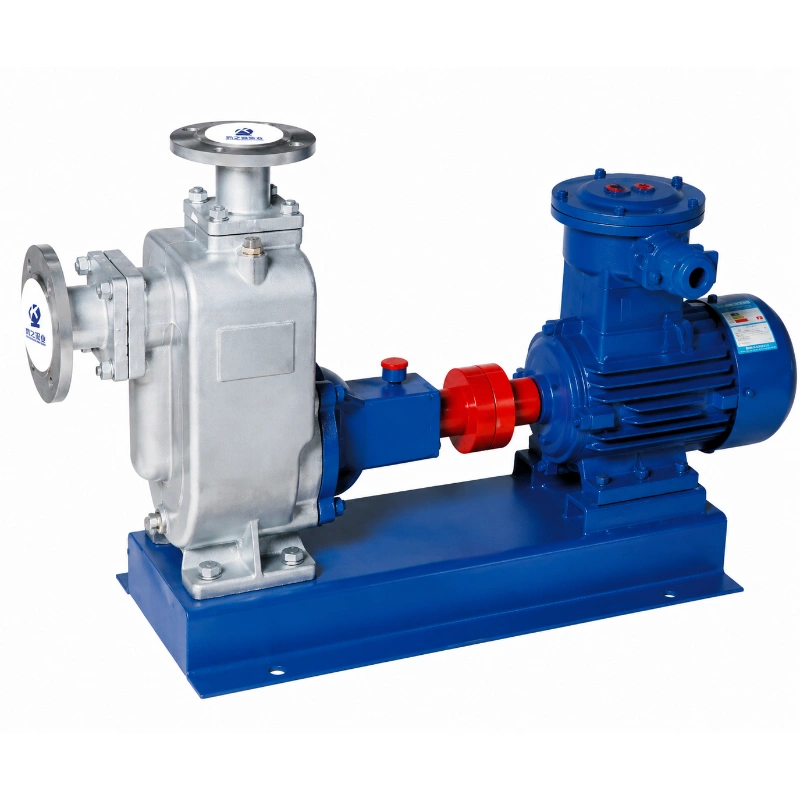
A self-priming sewage pump is a specialized type of centrifugal pump designed to automatically evacuate air from its suction line and create a vacuum to draw liquid into the system without the need for manual priming.
Unlike standard centrifugal pumps, which require the user to manually fill the pump chamber with liquid to drive out air before starting (and will fail or overheat if they become “air-bound”), a self-priming sewage pump always retains a requisite amount of start-up liquid inside its casing. This retained liquid allows the pump to mix residual air in the working mechanism with the fluid during the priming process, effectively clearing the air pocket and initiating the pumping action.
These pumps are explicitly engineered to handle tough, solids-laden liquids, slurries, and raw wastewater, making them the workhorses of sewage treatment and industrial effluent transfer.
How Does Self-Priming Sewage Pump Work?
The magic of this equipment lies in its clever internal architecture, which typically features a built-in vortex chamber and water reservoir. The operation can be broken down into distinct stages:
- The Reservoir Stage: When the pump is shut off, the casing is designed to hold onto a volume of fluid, ensuring it is ready for the next start.
- The Evacuation (Priming) Stage: When the pump starts, the impeller spins the retained water, creating a turbulent ring. This process mixes the water with the air trapped in the suction line. The resulting air-water mixture is pushed radially into the vortex chamber.
- Separation: Within the chamber, the air (being less dense) separates and vents out through the discharge port, while the heavier, air-free water recirculates back down into the casing by gravity to mix with more air.
- Continuous Pumping: Once all the air is evacuated from the suction line, atmospheric pressure forces the fluid up the pipe and into the impeller eye. The pump then transitions into standard centrifugal operation, pumping the sewage continuously.
Key Advantages of Self-Priming Sewage Pumps
The design of the self-priming sewage pump offers several distinct benefits over other pump types, such as standard submersibles.
- Rapid, Automatic Priming: The elimination of manual priming saves significant time and labor, especially in automated or remote systems.
- Surface-Level Serviceability: Perhaps the most significant advantage is deployment. Because these pumps are installed above ground (above the wet well), maintenance crews can access them easily. Unlike submersible pumps that must be hoisted out of a contaminated pit using lifting equipment, a self-priming pump allows for a single person to open a clean-out port and clear a jammed impeller using common hand tools.
- No Confined-Space Permits: Because maintenance happens at surface grade, crews often avoid the dangerous and heavily regulated process of entering confined spaces (like wet wells).
- Excellent Solids Handling: The non-clogging open impeller designs are built to pass large solid particles and long fibrous materials (often 40–60% of the outlet diameter), minimizing blockages.
- Durability and Lifespan: With above-water motors and easily replaceable wear plates, these pumps often see a service life of 8-12 years before requiring major refurbishment, compared to the frequent seal failures often seen in submerged units.
Types of Self-Priming Pumps for Sewage
While the basic principle remains the same, there are a few variations based on the specific demands of the job:
- Centrifugal Self-Priming Pumps: The standard and most common type, utilizing an impeller. Highly versatile for wastewater and sewage transfer.
- Trash Pumps: A heavy-duty sub-category of centrifugal self-primers, specifically engineered with large volutes and robust impellers to process heavy debris, sludge, and highly abrasive slurries common in construction dewatering or mining.
- Diaphragm Self-Priming Pumps: These use flexible diaphragms rather than impellers to move fluid. While less common for bulk municipal sewage, they are excellent for highly viscous sludges or chemicals with solids.
Applications
Self-priming sewage pumps are ideal for scenarios requiring intermittent operation, easy access, and the ability to handle debris.
- Municipal Wastewater Treatment: Pumping raw sewage, sludge, and scum in lift stations and treatment plants.
- Industrial Effluent: Handling aggressive chemical waste, process water, and industrial slurries.
- Construction and Dewatering: Removing muddy water, stormwater, and sand-laden liquids from excavation sites and trenches.
- Flood Control: Rapid deployment in urban drainage systems and emergency storm bypass situations.
- Agriculture: Transferring liquid manure or irrigation water containing debris.
Self-Priming vs. Submersible
When designing a lift station, engineers often choose between self-priming and submersible architectures.
| Feature | Self-Priming Sewage Pump | Submersible Sewage Pump |
| Placement | Above ground / Surface grade | Submerged in the wet well |
| Priming Method | Automatic via vortex chamber | None required (gravity fed) |
| Routine Maintenance | Easy access, fast clearance of clogs | Requires hoisting equipment out of pit |
| Confined Space Entry | Usually not required | Often required for pit maintenance |
| Suction Lift Limit | Max practical lift is ~6–8 meters (20-26 ft) | N/A (pushes fluid up) |
| Motor Life | Longer (dry, accessible, easily cooled) | Shorter (prone to seal failure in deep pits) |
Note: If your wet well is deeper than 8 meters, the suction lift will exceed the atmospheric ceiling, making a submersible pump the necessary choice despite the maintenance drawbacks.
Conclusion
The self-priming sewage pump is a triumph of fluid engineering, solving the classic problem of air-binding while providing robust solids handling and unparalleled ease of maintenance. By eliminating the need for manual priming and keeping the critical machinery above ground, these pumps reduce operating costs, improve worker safety, and ensure reliable performance in the most demanding wastewater environments.
FAQs
Can a self-priming sewage pump run dry without damage?
While the mechanical seal cavities are often oil-lubricated to tolerate brief periods of dry running during the initial priming phase, prolonged operation without liquid will cause overheating and severe damage to the mechanical seals and internal components. They should not be left running completely dry for extended periods.
What is the maximum depth a self-priming pump can pull water from?
Due to atmospheric pressure limitations and friction losses, the practical maximum suction lift for a self-priming pump is typically between 6 to 8 meters (approximately 20 to 26 feet). If the liquid level drops below this depth, the pump will not be able to create enough vacuum to lift the fluid, and a submersible pump must be used instead.
Why would my self-priming pump fail to prime?
If the pump fails to prime, it is usually due to one of three reasons:
1. The pump casing was completely empty and lacked the initial reservoir fluid needed to create a vacuum.
2. There is an air leak in the suction line, preventing a vacuum from forming.
3. The suction lift is too high (exceeding the pump’s physical limits).