





How to Select a Fire Pump for Commercial Buildings and Industrial Facilities?
Release time: 2026-10-30
Table of Contents
Choosing the right fire pump is an important part of planning a reliable fire protection system. Commercial buildings such as shopping malls, hotels, hospitals, and office complexes have different water supply requirements from industrial facilities, warehouses, and power plants. Building height, pipeline layout, required water pressure, and available installation space can all affect equipment selection. A pump that does not match the system’s actual requirements may result in insufficient flow or unsuitable pressure during operation.
When selecting a fire pump for commercial buildings, project owners and engineers should look beyond rated power or product size. The key is to match the pump’s performance parameters with the fire protection system design and the conditions at the installation site. This guide covers the main factors to consider, including flow rate, head, pump structure, and operating conditions. It also introduces the XBD fire pump range offered by Kaizhiquan through PumpsHKZQ as a reference for commercial and industrial projects.
Commercial Buildings vs. Industrial Facilities: Understanding Different Fire Protection Needs
Commercial and industrial projects may both require dependable fire water supply, but their operating environments are not necessarily the same. Shopping malls, hotels, hospitals, and residential buildings often have multiple floors, public areas, and complex internal pipeline networks. The required pump performance needs to be determined according to the building’s fire protection design, including its demand for water flow and pressure. Installation space is another practical consideration, particularly when the pump room is located in a basement or a compact service area.
Industrial facilities can involve large buildings, production zones, storage areas, and specialized operating environments. Warehouses, power plants, and petrochemical facilities may have different fire protection arrangements depending on their layout and project-specific risks. For these applications, engineers should consider the designated fire protection system, pipeline conditions, and required operating parameters before choosing an industrial fire pump. Rather than assuming that one configuration suits every facility, buyers should use the project’s engineering specifications as the starting point. This helps narrow down suitable equipment and reduces the risk of selecting a pump based only on general application descriptions.
Check Flow Rate Before Selecting a Fire Pump
Flow rate indicates how much water a pump can deliver over a given period. It is one of the first parameters to check because the fire protection system must receive the water supply required by its design. If the selected pump cannot provide the specified flow, it may not meet the system’s operating requirements. Choosing a pump with a much higher capacity than the project needs does not automatically make the system more reliable. The equipment should be matched to the required duty point rather than selected by maximum capacity alone.
Before comparing products, confirm the rated flow requirement in the fire protection system design documents. The XBD Vertical (Horizontal) Single-Level Fire Fighting System listed by PumpsHKZQ has a stated flow rate range of 1–120 L/s. This range provides options for projects with different water supply requirements, but the actual model must still be selected according to its corresponding performance data. Buyers should check whether the rated flow and head are available together for the specific model. An overall product range should not be interpreted as meaning that every flow rate can be achieved at every head.
Understand Pump Head and Required Water Pressure
Pump head is another essential factor in fire pump selection. It describes the energy the pump adds to the water and is commonly expressed in meters. In a building fire protection system, the required head is influenced by factors such as the vertical distance water must travel, pipeline resistance, and the pressure requirements of connected equipment. A high-rise commercial building may have different hydraulic requirements from a single-level warehouse, while an industrial facility may have a more extensive pipeline arrangement.
The XBD series product page lists a head range of 30–160 m. This information can help buyers determine whether the product family is worth considering for a particular project. However, final selection should be based on the calculated system requirements and the performance data for the specific pump model. Flow rate and head must be evaluated together because pump performance changes with the operating point. If the project design specifies a particular flow and pressure requirement, provide both values to the supplier rather than asking for a pump based on head alone. This makes model selection more accurate and helps avoid mismatches between the pump and the fire protection network.
Vertical or Horizontal: Which Pump Structure Fits the Site?
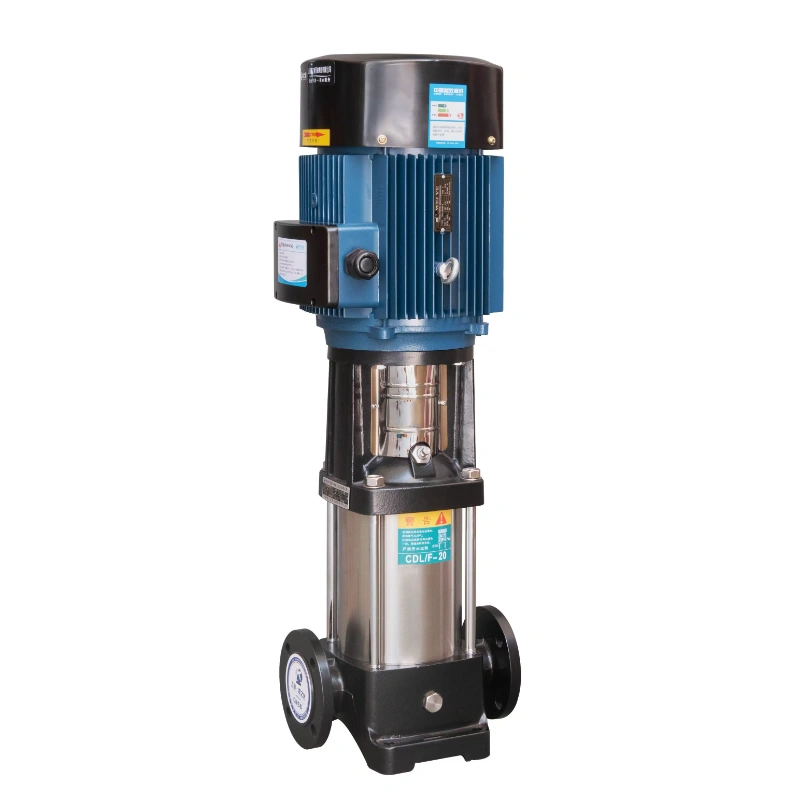
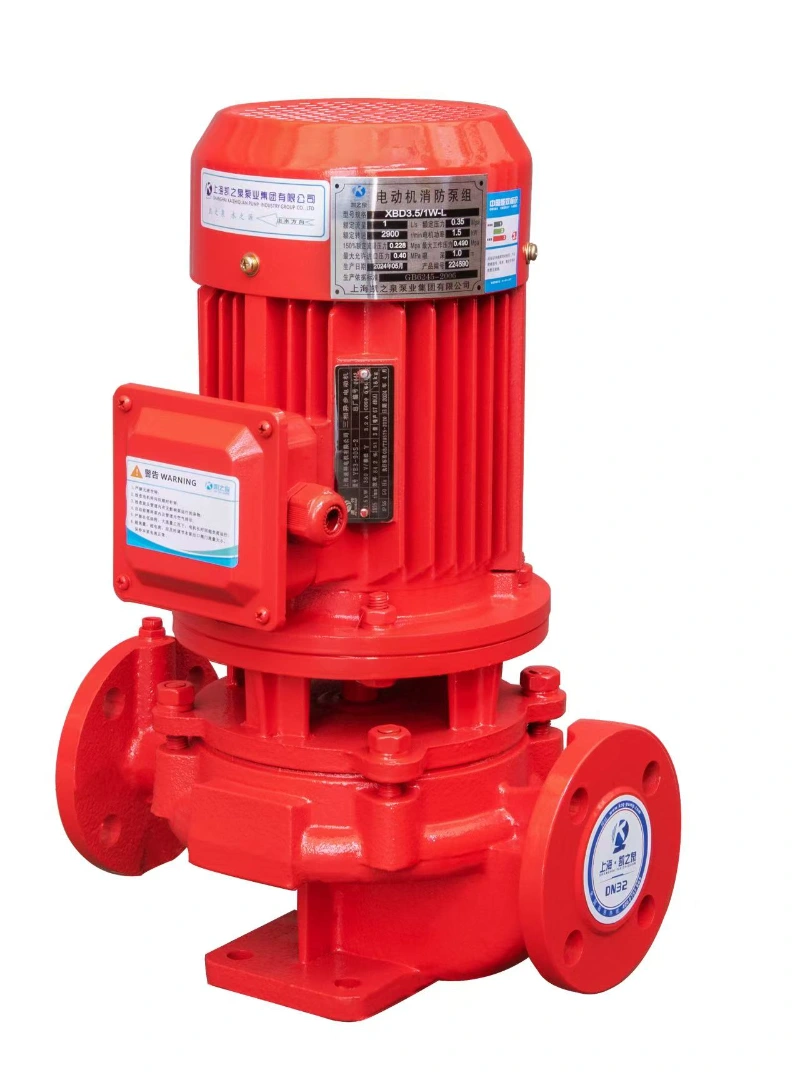
Installation space and maintenance access can influence the choice between vertical and horizontal pump configurations. A vertical single-stage fire pump is often considered when the pump room has limited floor space or when a compact arrangement is preferred. Its vertical layout can help make better use of the available installation area. This can be useful in commercial buildings where mechanical rooms need to accommodate several types of equipment.
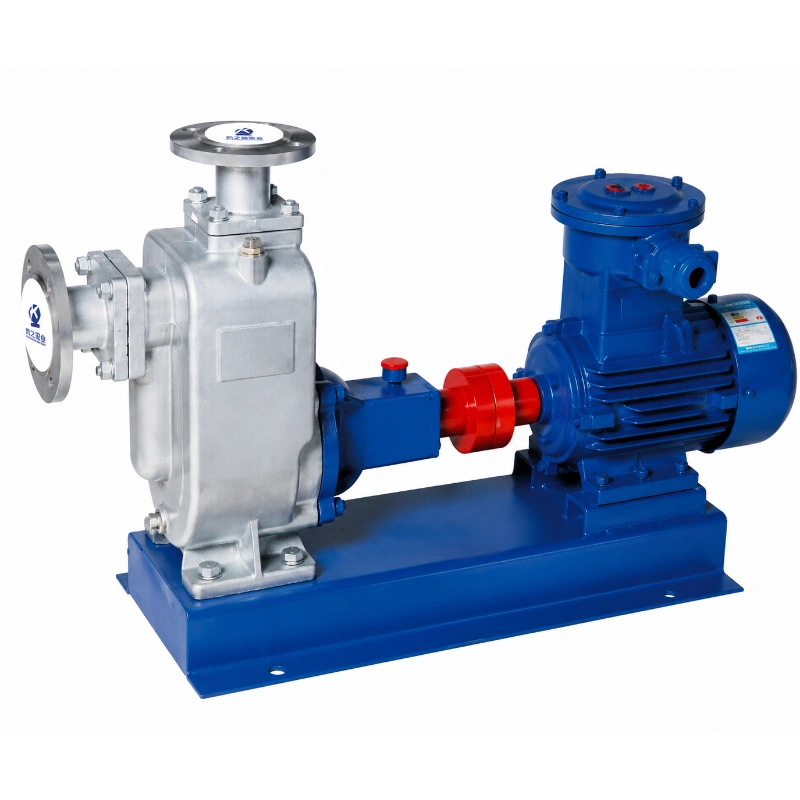
A horizontal single-stage fire pump may be considered when the pump room has sufficient floor space and convenient access for inspection and servicing is a priority. The product information describes both vertical and horizontal configurations, allowing buyers to consider the installation conditions of their projects. The choice should not be based on orientation alone. Engineers should also review pipeline connections, foundation requirements, maintenance clearance, and the equipment layout within the pump room. Kaizhiquan’s XBD product range offers these structural options, giving project teams a basis for discussing the most suitable arrangement with the supplier.
Check Operating Conditions and Pump Compatibility
Before purchasing a fire pump, confirm that the liquid and operating environment are compatible with the product specifications. The XBD product information states that the pump is designed to handle clean water or non-corrosive media with physical and chemical properties similar to clean water. The content of insoluble solid matter should not exceed 0.1%. Its stated medium temperature range is -15°C to 120°C, while the ambient temperature should not exceed 40°C and relative humidity should remain below 95%.
These conditions matter when evaluating equipment for different facilities. For example, a pump intended for clean fire water should not automatically be assumed suitable for transferring wastewater, corrosive liquids, or media containing substantial solid particles. Buyers should provide the supplier with details about the liquid, temperature, and installation environment before confirming a model. It is also important to check the motor power and rated speed against the selected pump’s performance requirements. The product range lists a power range of 1.5–200 kW and rated speeds of 2900 r/min and 2850 r/min, but the appropriate configuration depends on the specific model and project design.
Why Consider the XBD Single-Level Fire Fighting System?
For projects that require a single-stage fire pump configuration, the XBD Single-Level Fire Fighting System is one option to evaluate. According to the product information from PumpsHKZQ, the series is developed for fire protection applications and uses hydraulic models designed to meet user requirements. Its stated advantages include a coaxial motor and pump arrangement, a carbide mechanical seal, and a compact structure with aligned inlet and outlet connections.
The product page also states that the series has been tested by the National Center for Quality Supervision and Inspection of Fire Fighting Equipment and received a Fire Product Certification Certificate from the Fire Product Conformity Assessment Center of the Ministry of Emergency Management. Buyers should review the relevant certificate and confirm its applicability to the exact model and project requirements during procurement. With flow rates listed from 1–120 L/s and head values from 30–160 m across the product range, the series may be considered for commercial buildings, industrial plants, warehouses, hospitals, hotels, and other listed applications. Kaizhiquan can help buyers review the available model information against their project specifications before they make a selection.
What Information Should You Prepare Before Purchasing?
Preparing the right project information can make communication with a fire pump supplier much more efficient. Start with the building or facility type, the fire protection system design, and the required flow rate and head. If the project has specific installation restrictions, provide the pump room dimensions, pipeline arrangement, and preferred vertical or horizontal configuration. These details help the supplier understand the site conditions rather than recommending equipment based on a general description.
It is also useful to provide the operating environment, water characteristics, power supply requirements, and any applicable project standards or certification requirements. Ask for the performance data of the proposed model and check that its rated flow and head match the design duty point. For larger projects, the selection should be reviewed by the responsible fire protection designer or qualified engineer. A clear set of requirements helps avoid unnecessary model changes and supports a more suitable equipment configuration. Before placing an order, confirm the model, technical documents, delivery scope, and after-sales arrangements with the supplier.
FAQ
What type of fire pump is suitable for commercial buildings?
The suitable pump depends on the building’s fire protection design, required flow rate and head, pipeline arrangement, and available pump room space. Buyers should use the project’s engineering specifications to identify the required performance before comparing models.
Can an industrial fire pump also be used in a commercial building?
Potentially, but the application should be assessed according to the pump’s rated performance, operating conditions, and the building’s fire protection design. The intended application label alone is not enough to confirm suitability.
How do I determine the required flow rate and head?
These values should come from the fire protection system design and hydraulic calculations. Building height, pipeline resistance, and the requirements of connected equipment may affect the required operating point. Consult the project engineer rather than estimating the values from building type alone.
What is the difference between vertical and horizontal fire pumps?
The main practical difference is their installation arrangement. Vertical models can help save floor space, while horizontal models may provide convenient access for servicing where sufficient room is available. The final choice should also consider piping, foundation, and maintenance requirements.
What information should I send to a fire pump supplier?
Provide the required flow rate, head, application, installation space, operating conditions, power supply details, and applicable project standards. Sharing the project specifications helps the supplier identify models for further technical review.